Creamy Tortellini Soup that is comforting, cozy, and so yummy! Rich and creamy tomato broth, cheesy tortellini, fresh spinach, and Italian sausage.
INGREDIENTS
1 lb. ground mild Italian sausage
1 small yellow onion, diced
2celery stalks, diced
2 large carrots, peeled and diced
3garlic cloves, minced
1 teaspoonkosher sea salt
1/2 teaspoonground black pepper
1/2 teaspoonItalian seasoning
1 teaspoonfennel seed, crushed or chopped
one 6-oz. can tomato paste
1/2 cupdry white wine
1/2 cup all-purpose flour
6–7 cups chicken broth
14 oz. refrigerated cheese tortellini
2 cupshalf and half or heavy cream
1 handful chopped fresh spinach
Parmesan and fresh parsley for serving
INSTRUCTIONS
In a large stockpot set over medium-high, cook the sausage, breaking up into little pieces. When sausage is mostly browned, add onion, celery and carrot, sauté for 5 minutes or until the vegetables are soft.
Add the garlic, spices, and tomato paste; sauté for an additional 3-5 minutes, or until fragrant, stirring occasionally to prevent it from burning.
Add wine and let it cook out for a few minutes. Stir the flour into the sausage and cook for 1 minute. It’ll be sticky and dry. Gradually add in the chicken broth, stir to combine. Continue cooking until the mixture reaches a simmer, then reduce heat to low and simmer for 15 minutes.
Add the cream, then bring it to a low simmer. Add the tortellini and spinach. Cook just until tortellini is al dente, per package directions. Serve with fresh parsley and Parmesan and dunk with cheese bread! Oh my goodness. This is living.
Alongside her acting and entrepreneurial success, Jane Fonda has had her share of controversy. After the release of the 1968 psychedelic sci-fi film Barbarella, directed by her then-husband Roger Vadim, the movie became a massive cultural flashpoint surrounding the era’s sexual liberation movement, censorship, and the objectification of women. Then, during a 1972 visit to Hanoi, North Vietnam, the actress was photographed laughing and sitting on a North Vietnamese anti-aircraft gun used to shoot down American aircraft, earning her the nickname “Hanoi Jane.”
Even before the Hanoi trip, which was during the height of her anti-war activism, Fonda was subjected to surveillance by the U.S. government. While renting a charming Mediterranean Revival-style villa in the Hollywood Hills, the FBI tapped her phone lines and the CIA covertly intercepted and opened her mail. Now, the house where she lived during both of her first two marriages (to Vadim and later to activist Tom Hayden) has popped up for sale at $1.995 million, with Edward Piechocki of Douglas Elliman representing the listing.
The formal dining room’s French doors are flanked by stained-glass sidelights.Jeremy Spain
Last sold in 1985 for around $234,000 to the late character actors Bryan and Jo Deodato Clark—the former of whom ironically portrayed Fonda’s ideological rival, President Ronald Reagan, in several productions—the peach-hued stucco structure was originally built in 1924. Tucked away at the end of a cul-de-sac on less than a quarter-acre in the Whitley Heights Historic Preservation Zone, the five-bedroom, five-bath abode is accessible via two street-side entrances. It spans roughly 4,200 square feet across three levels.
Among the highlights is a fireside living room leading to a family room that opens out to a canyon-view patio donning a red-brick surface. A formal dining room with an antique-style hanging pendant light and multi-paned French doors with stained-glass sidelights flows into the remodeled kitchen with a breakfast bar accompanied by a casual seating area with built-in banquette seating.
A remodeled kitchen blends warm wood cabinetry with modern stainless steel appliances.Jeremy Spann
A guest suite on the lower level has its own entrance, laundry, and kitchen, while a primary retreat on the uppermost floor features a small private balcony, a separate flexible space that could serve as an office, and a bath anchored by a freestanding oval soaking tub set over a bed of river rocks. The terraced hillside grounds host a freeform pool and spillover spa wrapped by a spacious tiled sundeck and an elevated lounging deck, along with a built-in grill, gardens, and mature fruit trees.
In addition to being covered by a Los Angeles Conservancy easement that protects the historic façade, the property is covered under the Mills Act, which provides significant property tax savings in exchange for preserving a structure’s historic character.
Click here for more photos of the Hollywood Hills residence.
Higher mortgage rates don’t just affect buyers. They can change what it takes to sell your house, too.
That’s because today’s buyers are paying close attention to affordability. And when rates rise, even a relatively small change can make a noticeable difference in their monthly payment. So, they’re looking for ways to make the numbers work. And in some markets, new construction is giving them exactly that.
If you’re planning to sell, that doesn’t mean you can’t compete. But it does mean you need to understand what builders are doing to win over buyers – and what options you have, too.
Builders Are Competing on the Monthly Payment
New construction has something interesting going for it right now. While existing-home sales (homes that have previously been lived in) continue to struggle under the weight of higher mortgage rates, new-home sales are holding up a bit better.
In a recent interview, Logan Mohtashami, Chief Economist at HousingWire explains new-home sales are at an 8-month high and are now running around 2019 levels. On the flip side, existing home sales are lagging behind and fall about 1 million home sales short of 2019 levels.
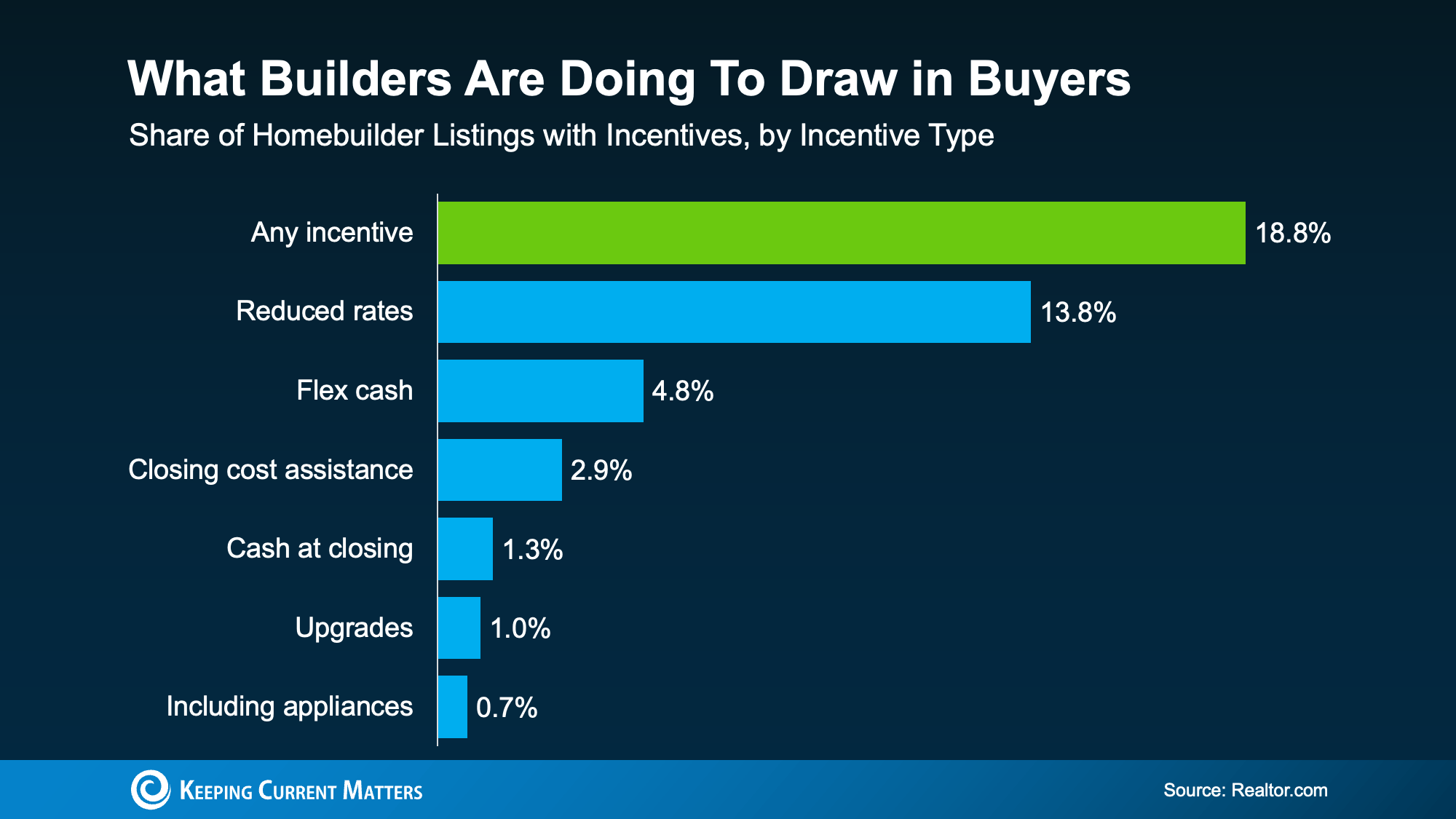
One big reason builders have been able to navigate higher rates differently is incentives. According to Realtor.com, nearly1 in 5 (18.8%) newly built homes come with some kind of buyer incentive advertised up front:
The most common may surprise you. As the graph shows, many builders are offering reduced rates, sometimes through something called a mortgage rate buydown.
It’s essentially where they pay upfront costs to help buyers get a lower rate, and by extension, a lower monthly payment. It has obvious draws for buyers. For homebuilders, it helps them get their houses sold. So, a lot of builders see it as a win-win. That’s why reduced rates are a part of 13.8% of new home listings.
In some cases, builders are offering rates below 6%, maybe even far below 6%. And that can help buyers shave hundreds off their monthly payment. That’s a big difference to a buyer who are feeling the pinch right now.
So, How Can Sellers Like You Compete?
First, don’t assume a mortgage rate buydown is something only a builder can offer. Sellers can contribute toward a buyer’s rate buydown too, depending on the loan and transaction. Does that mean you should offer one? Or that you have to if you want to compete? Not necessarily.
A buydown is just one possible lever. Depending on your market and the buyer, it may make more sense to negotiate on price, contribute toward your buyer’s closing costs, make repairs, or make sure your house stands out in ways a new build can’t. That’s why working with an agent who knows your local competition matters. Joel Berner, Senior Economist at Realtor.com, says:
“Sellers of existing homes are facing a lot of competition from the new-home space. . . so sellers should highlight the local amenities of their neighborhoods in contrast to the more suburban or exurban communities where many new homes are built.”
A great agent will do this naturally anyways. Knowing what makes your house different and showcasing that in your listing can help your house stand out. And remember, being open to making a few compromises or throwing in some concessions can make a bigger difference for buyers than you may think.
Today’s Market Rewards Sellers Who Adapt
Builders have also been quicker to adjust their prices based on what buyers can actually afford and where demand is. That’s putting pressure on the resale market in some areas. Robert Dietz, Chief Economist at the National Association of Home Builders (NAHB), explains:
“. . . existing homeowners now have to do the price discovery that builders have been doing since 2022.”
That’s an important message if you’re hoping to sell.
You don’t automatically need to slash your price or offer a big concession. But you do need to price and market your house based on what buyers can pay today – not what sellers could get a few years ago.
And remember, this varies tremendously by location. New construction represents a much bigger share of the competition in some markets than others, and builder incentives aren’t equally common everywhere. So, lean on an agent to see how big of a factor builders are in your area.
Bottom Line
Higher mortgage rates are making buyers more cost-conscious. Builders know that, and many are responding with rate buydowns, closing-cost help, price reductions, and other incentives.
If you’re thinking about selling, talk to an agent about what buyers are getting from other homes in your area – including new construction – so you can make sure your house is positioned to compete.
A handful of pantry/fridge staples probably already on hand for this baby, but then round up the rest and get ready. We’re using the standard crinkly ramen from the little packages (minus the spice packet) but any stir fry noodles would also work great here!
For the sauce:
soy sauce
gochujang sauce (like this one(affiliate link)) or gochujang paste (will be spicier)
tomato paste
peanut butter
brown sugar
sesame oil
garlic
broth or water for thinning
For the noodle paradise:
ground chicken (ground pork could work too!)
ramen noodle bricks (just the noodles)
fresh spinach
fresh herbs, chili oil, and sesame seeds for topping
The type/brand of gochujang sauce will also determine your spice level. When testing with the P.F. Chang brand, it was definitely on the mild side and was totally kid-able. But other brands like Bibigo packed more heat.
What Is Gochujang?
If you’re not familiar, gochujang — a staple ingredient in Korean cooking with an absolutely delicious lingering heat and strong umami flavor — mixed with some other ingredients like soy sauce, vinegar, and a sweetener. Gochujang itself is a spicy-sweet-savory paste that is made from fermented soybeans, red chile pepper flakes, sticky rice, and salt and it is commonly used to flavor meat dishes, soups and stews, and sauces. You can read a little more about how it’s made and used from Christina Chaey over at Bon Appetit.
For this recipe, we actually used a gochujang sauce which is premixed with other ingredients, mostly because it is almost always available at our local grocery store. But also because it is a little less potent than the paste, closer to a mild sriracha, whereas the paste is thicker and spicier.
If you happen to have the paste, it is definitely a deep and interesting flavor and can of course be used here! But you might consider adding a splash of soy sauce and honey to balance out the flavors.
Let’s Make These Delicious Weeknight Noodles
Easy peasy is the name of the noodle game here so you could definitely whip these up on a weeknight. Or multiple weeknights in a row, should your heart to desire. Let’s get to it.
Sauce. Whisk the sauce ingredients (minus the extra broth) in a small bowl or just give them all a jar-shake until thick and creamyish.
Chicken. Get your ground chicken browned up in a skillet and season generously.
Noodles. Again, we just used the wavy noodle ramen bricks and cooked until softened.
Magic. Once the chicken is done add your fresh spinach and the cooked/drained ramen, cover in sauce and toss everything over heat to combine. Add extra broth as needed to get to your optimal sauciness.
Serve those noodles piled in a bowl, absolutely showered with fresh herbs, green onions, sesame seeds, maybe a little chili oil. YES.
Just a quick textural note, these noodles will get stickier (still very delicious!) the longer they rest, so you may have to add a little water to loosen things up and get back their silkiness when you’re returning for seconds, thirds, fourths or leftovers.
Subs and Jazzers For This Noodle Pile
What is truly great about a weeknight wonder like this is that you can really make it your own! You can swap ground pork or ground turkey for the meat, or if you want to make it vegetarian you could try:
or just pile in the veggies (peppers? roasty brocc? mushrooms? could all be great!)
If you don’t have or can’t find the gochujang sauce or paste, you could certainly sub in some sambal oelek, sriracha or any other chili paste you might have (or make a recipe like this stir-fried udon). Just check the spice levels as you go!
And this would not be a noodle wonderland if you did not jazz it up with piles of fresh herbs on top — basil, cilantro, chives, green onions, or all of the above. Are you going to drizzle with sesame oil and squeeze on some lime juice and sprinkle some toasted sesame seeds on top? Man, we hope so.
Please report back on how often you are making these so we can feel totally normal and non-obsessive about how often we’re making these, ok? Carry on, noodle lovers.
GOCHUJANG NOODLES: FREQUENTLY ASKED QUESTIONS
How does this hold up for leftovers?
This makes for a very delicious lunch the next day! The texture does get stickier the longer it rests, so you may just need add some more water to loosen everything up and make it saucy again.
What’s the difference between gochujang sauce and gochujang paste?
Gochujang sauce is premixed with other ingredients, thinner in consistency, and more mild. Gochujang paste is thicker, spicier, and more potent than the sauce. We’re using sauce in this recipe!
How could I make this gluten-free?
Rice noodles would work great here!
How spicy is this recipe?
If you’re using gochujang sauce, they have a kick (because, well, gochujang!) but still somewhat mild. If you’re using the paste, definitely higher on the spice level.
How can I make this vegetarian?
Skip the ground chicken or sub in your favorite vegetarian sub (like tofu!).
Source Notes:This recipe was inspired by these Gochujang-Sesame Noodles by Zaynab Issa at Bon Appétit. You can also read a little more about gochujang and how it’s made from Christina Chaey over at Bon Appetit.
Saucy Gochujang Noodles With Chicken
Spicy, peanutty, noodley bit of super easy comfort food coming your way! These gochujang noodles require just a handful of pantry ingredients – like ramen noodles, peanut butter, sesame oil, soy sauce, and more – and come together in just 20 mins. Weeknight win!
INGREDIENTS
Gochujang Sauce:
3 tablespoonssoy sauce
2–3 tablespoons gochujang sauce(like this one (affiliate link))
2 tablespoonstomato paste
2 tablespoonspeanut butter
2 tablespoonswater
1–2 tablespoons brown sugar
1 tablespoonsesame oil
1 clove minced garlic
1–2 cups broth or water for thinning the sauce
Ramen:
1poundground chicken (could also use pork)
1/2 teaspoonsalt
freshly ground black pepper
2 packets ramen or stir fry noodles(just the noodles)
1–2cupsfresh spinach
1/4cupchives, scallions, cilantro, basil, or whatever herbs you like for topping
salt to taste
1 tablespoonchili oil for finishing
1 tablespoonsesame seeds for finishing
INSTRUCTIONS
Whisk the sauce ingredients (except the extra broth) in a small bowl or shake together in a jar. It should form a thick sauce.
Cook the chicken in a large skillet over medium high heat. Season generously with salt and pepper.
Boil the noodles for just a few minutes to soften. Drain and set aside.
When the chicken is done, add spinach, cooked noodles, and sauce to the pan, keeping it over medium high heat. Toss to combine; heat until the spinach is wilted. Add extra water or broth to thin the sauce, a little at a time, to get the sauciness that you like (I usually add about 1 1/2 cups total).
Serve topped with fresh herbs, scallions, chili oil, sesame seeds, and whatever else you like.
The equipment section may contain affiliate links to products we know and love.
NOTES
The type of gochujang used will determine how spicy the noodles are. I’ve used both the Bibigo brand and P.F. Chang’s brand. With the P.F. Chang’s gochujang sauce, I felt like it was mild enough to serve to my kids. If you want to be sure, you can reduce the overall amount of gochujang and then just add a bit of extra heat with chili oil or the gochujang sauce for the spicy lovers right before serving.
Back in early 2022—already owning a petite hideaway in Malibu Colony and fresh off picking up a $14 million Beverly Hills spread—Michael “Flea” Balzary put his funky architectural digs in the La Crescenta foothills on the market for nearly $9.8 million. More than four and a half years and several price cuts later, he is giving it another go after briefly offering it as a rental.
The longtime Red Hot Chili Peppers bassist is now seeking $5.75 million for the 5.7-acre spread in the unincorporated community near Glendale—around $1.5 million more than the $4.25 million he paid contemporary artists Lari Pittman and Roy Dowell for the place in 2018. However, the price does account for an 875-square-foot subterranean addition installed in 2021, as well as a pool and cabin tacked onto the land in 2020. Jett Gelber of Crosby Doe Associates holds the listing.
The seven-sided main home was designed by Michael Maltzan in 2019.Cameron Carothers
Resting about 20 miles north of Downtown L.A., amid a curated succulent garden bordering the Angeles National Forest, the hilltop compound is sequestered down a lengthy driveway. The 5,186-square-foot estate features two primary dwellings: a white stucco and glass main house designed by L.A.-based architect Michael Maltzan in 2009, plus a 1950s midcentury classic specially crafted by noted modernist architect Richard Neutra for his secretary, Dorothy Serulnic, and her husband George.
Also on the premises are a striking one-bedroom cabin clad entirely in redwood, an outdoor movie pavilion, and sweeping mountain and city lights views from every vantage point. As for the main home—commissioned by Pittman and Dowell—the impressive, seven-sided structure wraps around a central courtyard and seamlessly integrates Maltzan’s recent addition. Featured in Architectural Record, the masterwork has garnered a trio of awards from the American Institute of Architects.
Standing out inside is a primary bedroom sporting a striking curvilinear, penny-tiled bath. The geometric layout also holds a dedicated office, a den, and an abundance of clever built-in storage. Outdoors, the entertainment-focused grounds host a 50-foot Johnston Vidal lap pool and the previously mentioned movie pavilion, which is fully outfitted with a wind screen and a catering kitchen for large-scale events
The original 1950s Richard Neutra-designed residence.Cameron Carothers
Known as the Dorothy Serulnic Residence, the original abode packs two bedrooms and a full bath into 1,350 square feet of restored living space boasting walls of glass and a stone fireplace. Neutra-designed built-ins can be found throughout—think a sofa system sporting a record player and concealed speakers, along with several desks, shelving systems, a dining room table, a sliding breakfast table, and a vanity.
Referred to by a previous listing agent as “literally your own midcentury space station right here in Los Angeles,” the compound is less of a standard home and more of a multisensory artistic retreat—a fitting canvas for a musician who has spent his career coloring outside the lines. Flea, who is currently working on a new album with the Red Hot Chili Peppers, also released his debut solo album, “Honora,” in March, showcasing his talent on the jazz trumpet.
Today’s housing market splits into four distinct types. You’ve got cash buyers, buyers financing a purchase, owners who feel locked into a low rate, and builders with homes to sell. Which type you’re in changes how you should buy or sell. Ryan Serhant, CEO of SERHANT agrees:
“There is no longer a housing market . . . There are four Americas.”
Here’s what each looks like, and what it means for you.
Cash Buyers: 1 in 4 Buyers Are Paying with Cash
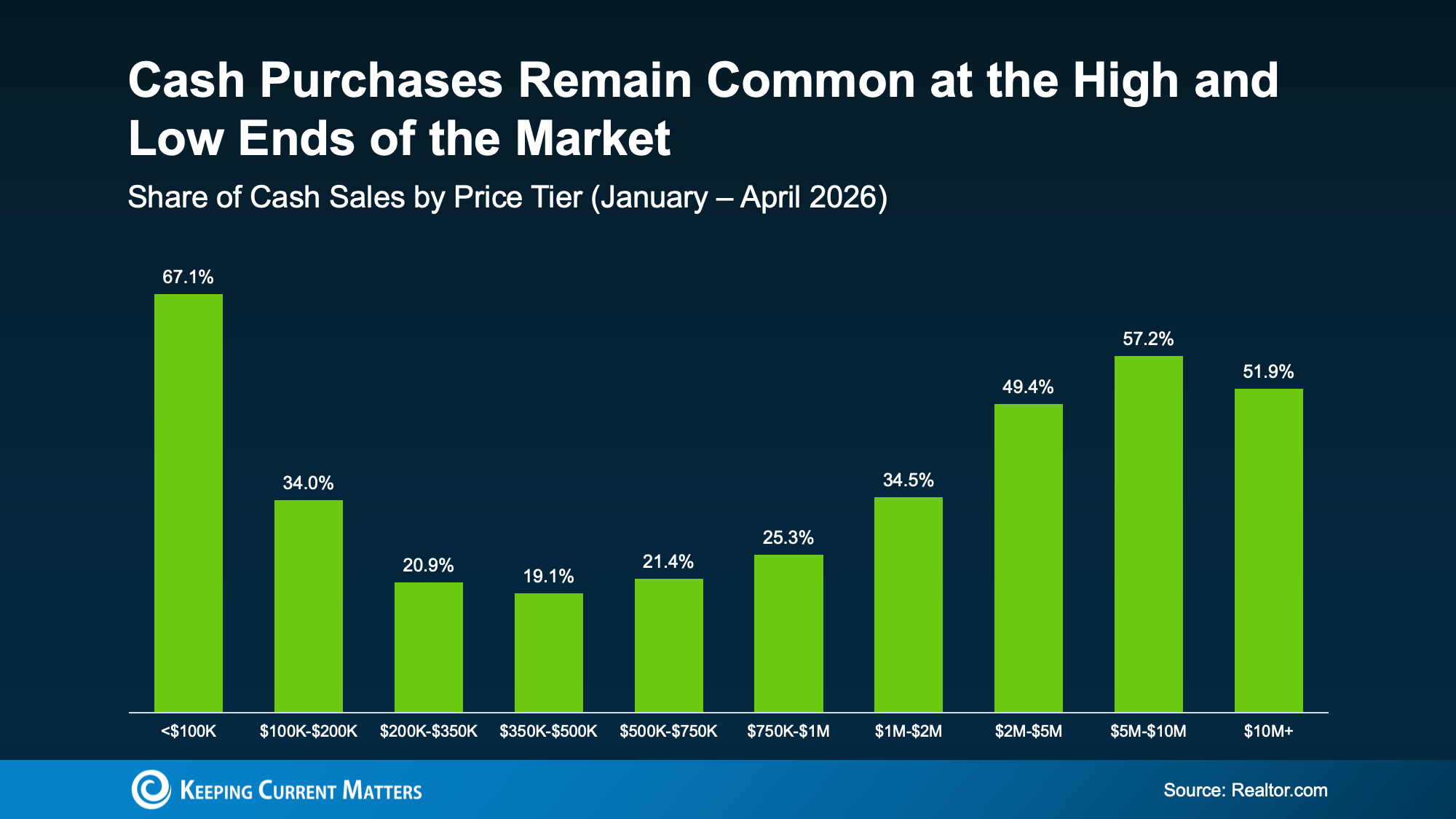
If you already own a home, you may be able to buy your next place in cash thanks to your equity. In fact, 26% of existing home sales this summer were all-cash, according to the National Association of Realtors (NAR). That’s roughly 1 in 4 buyers skipping a home loan entirely.
Data from Realtor.com shows most are at the very top and very bottom of the market by price point (see graph below):
For Buyers: If you’re able to buy in cash too, having no financing contingency means your offer is going to look really appealing to sellers. You may get a faster close and more room to negotiate.
For Sellers: A cash offer can mean less risk of the deal falling through, but that certainty sometimes comes with a lower number attached. Compare the whole picture before deciding it’s automatically your best offer.
Buyers Using Financing: They’re Not Getting Help from Rates, But They Are from Sellers
If you’re looking to take out a mortgage, you should know mortgage rates aren’t likely to come down anytime soon. Data from Fannie Mae shows nearly half of experts actually raised their long-term rate forecast this year (see graphs below):
That’s tough for homebuyers relying on a mortgage, especially first-time buyers. But it’s not all bad news.
While buyers may not be getting the lower rates they want, at least there’s help to be had if you ask sellers for what you really need. Redfin data shows almost half of May sales included a concessionlike a rate buydown or closing-cost credit from the homeowner.
For Buyers: Stop waiting on rates to drop. Negotiate the concession instead. If the payment works today, that’s your signal.
For Sellers: Expect to negotiate. Build a concession into your pricing strategy from the start could be the thing that gets a deal done.
Rate-Locked Homeowners: Most Are Sitting on a Rate Below 5%
If you own a home already, you might not want to move and take on a higher rate than the one you’ve got. That’s the case for a lot of people. About 2 in 3 homeowners have a mortgage rate under 5%, according to Federal Housing Finance Agency (FHFA) data (see graph below).
When a homeowner has a rate that low, it’s harder for them to want to move and leave behind that ultra-low rate. Because, they’d likely have to take on a higher one on their next home. Hence “rate locked” – they feel locked in.
And, according to Fannie Maedata, most experts think that lock-in will stick around another 3-5 years. That means this will continue to be a factor in how many homes come up for sale.
For Buyers: Fewer homeowners are listing, but the ones who do usually have a real reason to move. They’re often more flexible, motivated sellers.
For Sellers: Run the math on what your equity actually buys before ruling out a move. Got an FHA or VA loan? Ask about making it assumable. It’s rare, but it’s a real selling point.
Homebuilders: They’re Negotiating More Than You Think
If you’re looking at new construction, this might be your moment. According to the latest Censusdata, builders have more unsold new homes sitting around than usual, enough that it would take nearly 10 months to sell them all at the current pace (well above the normal 4-6 months pace). That’s pushing builders toward price cuts and rate buydowns.
For Buyers: That’s where the deals are right now. Just be sure to use your own agent and compare the whole incentive package, not only the price tag.
For Sellers: Lead with what a builder can’t offer – mature landscaping, an established neighborhood, and a house that’s ready today, not in 8 months. That can help your house seem like a better optiona
Bottom Line
Four different housing markets are running at once: cash buyers, financed buyers, locked-in owners, and builders. Each one plays by its own rules, and the right move for one is exactly the wrong move for another.
Connect with a local real estate agent to figure out which one you’re actually in and build your next move from there.
Whether they’re new homeowners or not, plenty of consumers face sticker shock when they get their monthly utility bills. Nationally, average monthly utility bills rose to $412 in 2025, up 7 percent from 2024, according to JD Power.
Overall, non-mortgage costs to homeowners — including utilities, property taxes, homeowners insurance, maintenance and renovations — average nearly $24,000 annually on top of their mortgage principal and interest, according to the 2026 True Cost of Owning a Home survey by Clever Real Estate, a site that matches consumers and real estate agents. The biggest culprit: utility bills, which annually come to an average of $7,679.
“In our survey, 82 percent of homeowners said non-mortgage costs have increased since they bought their home, and 45 percent said those costs are higher than they expected,” said Clara Haverstic, a Raleigh, North Carolina-based data analyst for Clever. “Nearly one-third [29 percent] said they weren’t aware of these additional costs when they purchased their home.”
How to estimate utility costs
When home buyers are evaluated for a mortgage, lenders don’t include utility bills as part of their monthly expenses. Those costs vary widely depending on location, the size of the home and how energy-efficient it is, along with homeowner habits. While most people think primarily about electric and gas bills, many homeowners also pay water bills. Trash collection, internet, phone and cable services can also be included as utility expenses, although renters pay some of those bills.
“Between high prices and interest rates, buyers’ budgets are really stretched,” said Robin LeBaron, co-founder and president of Pearl, a provider of home-performance ratings for all single-family homes in the United States. “We sponsored a survey by Smart Energy Consumer Collaborative, which found that 84 percent of recent buyers said that energy efficiency was very or moderately important to their home-buying decision. But only about 8 percent of listings even mention energy efficiency.”
Buyers of single-family houses and townhouses with their own HVAC units can go to the website for Pearl, a provider of home-performance ratings, enter an address and get a score for the home’s performance. (Mario Tama/Getty Images)
Home buyers can ask their agent or the listing agent of a home they want to buy about estimated utility bills, which some sellers are willing to share, said Kendra Sinclair, a Hudson Valley, New York-based design trends expert at Thumbtack, a home services platform.
“Buyers can also call utility companies to get a 12-month look-back at the bills, since they’re tied to an address,” Sinclair said. “It’s important to get the full year of costs, since they’re typically lower in spring and fall and higher in the summer and winter.”
In some cases, a utility company will provide an average bill based on a comparable nearby home, said Marc Blackwood, owner of Real Property Management Pros.
“Buyers should ask their agent and sellers about energy-efficient upgrades in the property, along with the age of appliances and systems,” Blackwood said. “Always have a home inspection and ask the home inspector for estimates of the age and efficiency of appliances, along with the water heater and the heating and air conditioning system.”
Buyers of single-family houses and townhouses with their own heating and air conditioning units (rather than communal systems such as in a condo) can go to Pearl and enter an address to get a score for the house’s performance based on its safety, comfort, operations (which includes utility costs), resilience and energy efficiency, including whether it has solar power and storage. The score is based on data the insurance companies and mortgage underwriters see from public records, LeBaron said, along with some proprietary data. Homeowners can update information with documentation if anything is missing or inaccurate.
Installing ceiling fans can improve air circulation. (MileA/Getty Images/iStockphoto)
“Buyers can also ask their home inspector to review the age of the mechanical systems in a house and see whether they’ve been well-maintained, which will have a big impact on their efficiency,” LeBaron said. “Buyers can look for the make and model themselves, as well as the year a system was installed to estimate when they may need to replace it.”
If you have concerns about a house or your house inspector flags something, you can hire an electrician, a plumber or an insulation, roof or window expert to assess the relevant system or component and estimate replacement costs, Sinclair said.
“If you smell mold or mildew, you should ask your inspector to look for evidence of leaks, which can contribute to higher water bills,” she said.
Inexpensive ways to lower your utility bills
Depending on market conditions, it may be possible to ask sellers to make repairs or give you credit at the closing to pay for them, but generally if a system or appliance works, the sellers are not responsible for upgrading it. However, some simple and inexpensive fixes you can do after you move in to lower your energy bills include:
Caulking around doors and windows can help block drafts and make homes less expensive to heat. (Evgeny Gostuhin/Getty Images)
Replacing the weather stripping or caulk around doors and windows to block drafts.
Installing a programmable thermostat to schedule heat and air conditioning to reduce usage.
Adding thermal curtains to keep cold air out in winter.
Changing light fixtures or bulbs to LED lights, which last longer and require less electricity.
Changing or clean your air filters regularly to keep heating and air conditioning working smoothly.
Checking with your electric company to see if it charges more for usage during peak hours. If it does, you might be able to adjust your habits to reduce your electricity consumption then.
Hiring a plumber to tighten your outdoor water spigots.
Installing leak sensors under sinks and next to your water heater to catch leaks and get them repaired.
Installing low-flow faucets, showerheads and toilets to reduce water use.
Adding insulation to the attic, including the hatch to the attic.
Installing ceiling fans for better air circulation.
Buying a water heater blanket to keep energy in the unit and not heating the space around it.
A programmable thermostat can reduce energy usage by scheduling heating and air conditioning. (Olivier Le Moal/Getty Images)
“Homeowners should develop a plan based on when their appliances are likely to need replacing,” Haverstic said. “You have to assume things will break and need repair, so you should have dedicated savings for repair or replacement and know who to call.”
Haverstic suggests considering a home warranty, which is a service contract for the appliances and systems covered by the specific policy. Home warranty policies cost an average of $30 to $90 per month.
“In some cases, buyers can ask sellers to pay for a home warranty,” she said.
Blackwood recommends buying an annual service plan for your heating and air conditioning system as well as a plumbing service contract to catch issues before they get serious.
Bigger investments for future utility savings
Solar panels, like these in Folsom, California, are a good way to improve a home’s energy efficiency. (Rich Pedroncelli/AP)
If your inspector finds that your house lacks insulation or has old and damaged insulation, you might want to invest in professional spray foam insulation, which can quickly reduce energy consumption, Sinclair said.
“A midrange project that can improve comfort as well as lower your bills is to seal the air ducts in your attic,” LeBaron said. “You can install storm windows and a storm door if you have older single-pane windows and are not ready to replace them yet.”
Higher-cost improvements include a heat pump water heater and a high-efficiency heat pump.
“You’ll need to invest more if you’re replacing your heating and air conditioning system, your water heater, your windows and your appliances, but you’ll get payback over time from improved efficiency,” Sinclair said. “Depending on where you live and the availability of rebates from your utility company, solar panels and storage can have an even bigger impact.”
Financing these upgrades can be a challenge, but some mortgage programs such as FHA 203(k), Fannie Mae HomeStyle Renovation and Freddie Mac ChoiceRenovation loans allow borrowers to include renovation costs in their purchase loan. For example, home buyers can have an energy-efficient heat pump, extra insulation, better windows and a heat pump water heater installed before they move in — that’s as long as they can qualify for the larger loan payment. More often, homeowners wait until they can save money for upgrades or borrow against the home equity they build up over time.
Price cuts are turning up everywhere right now, and they read very differently depending on which side of the deal you’re on.
Sellers tend to worry a cut means walking away with less than they hoped. Sometimes that’s true, but more often it just means the market moved faster than the listing did.
Buyers, for their part, often assume a cut means something’s wrong with the house. Most of the time, that’s not it.
This is what’s actually driving all those price cuts, and why it matters no matter which side of the deal you’re on.
42% of Homes for Sale Are Now Carrying a Price Cut
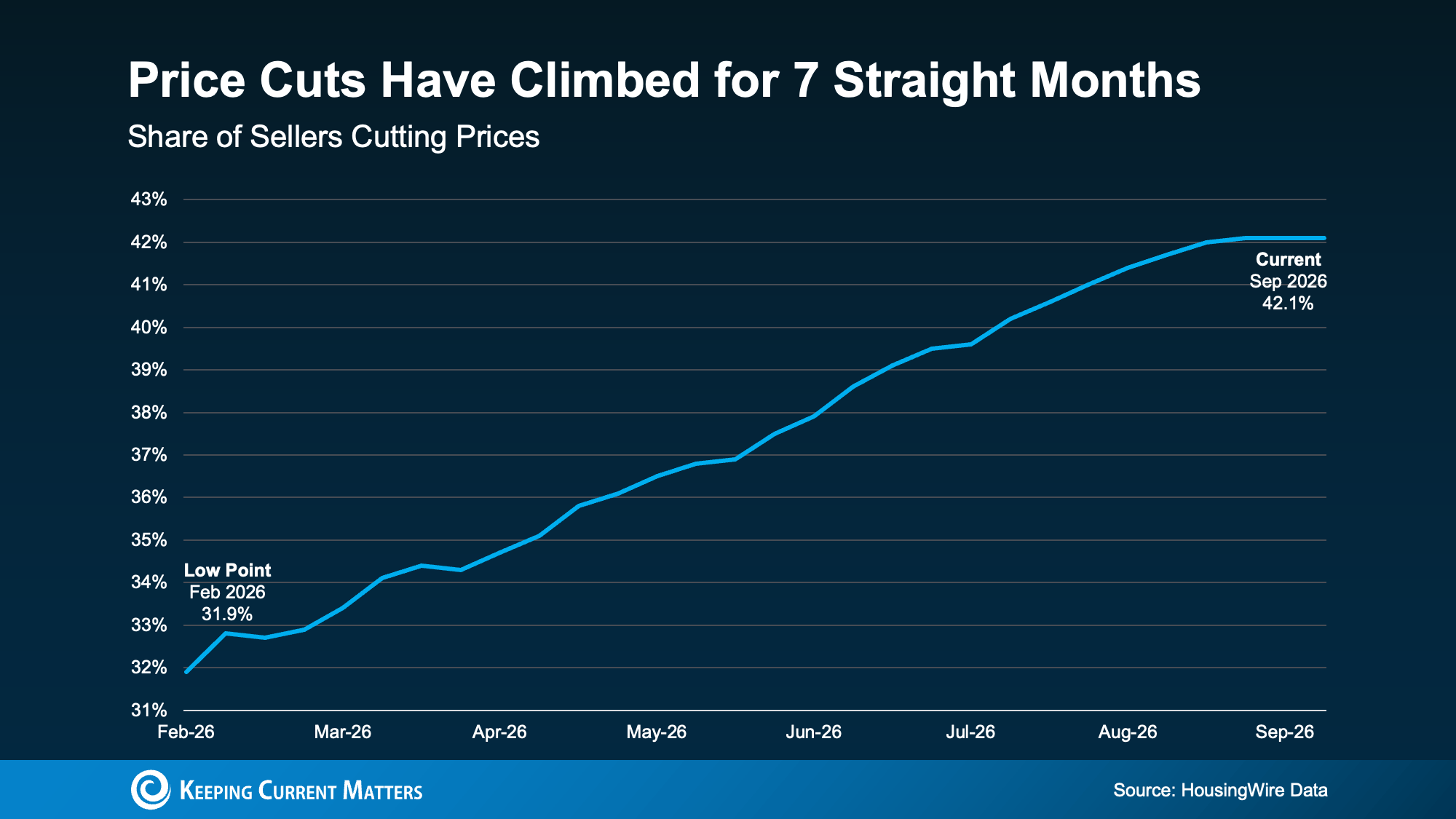
According to HousingWire Data, the share of sellers cutting their asking price has climbed every month for 7 straight months (see chart below):
Today, more than 4 in 10 active listings have had at least 1 price cut, and the typical seller is cutting about $17,560 off their original number.
Here’s why that’s happening. With rates still elevated and more homes to choose from, buyers can afford to wait for the right number. So, sellers who don’t start there often end up adjusting anyway.
What does that mean for you?
If you’re selling, this isn’t a red flag. But it is a sign that pricing it right from day 1 is your best bet. Just know that the market’s been shifting fast enough this year that sometimes even a well-priced house can fall behind within a matter of weeks. If that happens to you, dropping your price to catch up to where pricing actually stands today tends to bring in more buyers and helps you sell closer to true market value.
If you’re buying, it’s easy to assume a price cut means something’s wrong with the house. But with cuts happening on more than 4 in 10 homes right now, the reality is sellers are just catching up to where the market already is. And with affordability still tight, that’s exactly the kind of opening you need to get a better deal.
Why Sellers Are Adjusting Faster than Before
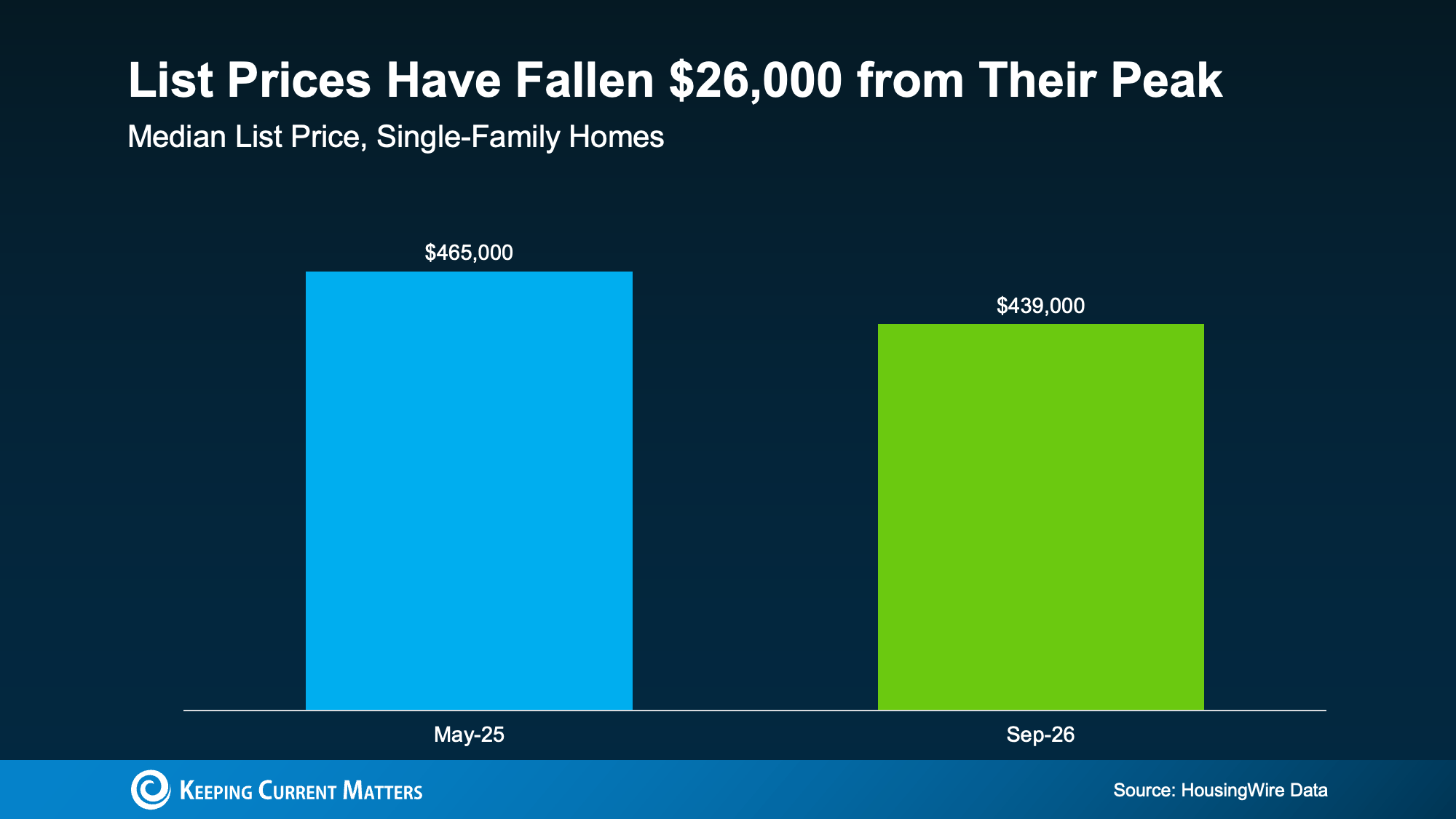
HousingWire Data also shows list prices are trending down nationally. That’s often a sign sellers are pricing more realistically from the start instead of listing high and getting stuck cutting later. List prices have fallen about $26,000 from last year’s peak.
Some of that decline is seasonal, since list prices typically soften each winter before rebounding in the spring. So, expect asking prices to keep drifting a little lower before turning back around (see chart below):
Jake Krimmel, Senior Economist at Realtor.com, explains:
“That is good news for buyers, who are seeing lower asking prices and more room to negotiate, but it is also good news for sellers: Pricing to today’s demand is helping homes move and keeping more transactions alive in a high-rate environment.”
Translation – with rates still elevated, buyers can only stretch so far. Sellers who meet them where they are instead of holding out for unrealistic prices are the ones actually getting to closing. And doing that up front is always better than chasing the market later.
Buyers, You’ve Got Room To Negotiate Again
At the same time, Redfin data shows sellers now outnumber buyers by about 58%, the widest gap on record (see chart below):
That changes the power dynamics of the market – and impacts how homeowners should price their house. Nationally, about 7 in 10 markets now favor buyers or are trending that way.
For sellers, that means standing out matters as much as pricing. With more homes to choose from, buyers are comparing you directly against the competition. So, a little flexibility, like covering closing costs or being open on timing, can be what gets your house picked over another.
For buyers, it means more room to ask for a lower price, help with closing costs, repairs after inspection, or some combination of all 3. That’s especially true for homes that have already sat for weeks, where sellers are often the most willing to talk.
Bottom Line
Price cuts are a normal part of today’s housing market, and both buyers and sellers can use them to their advantage. Connect with a local real estate agent to look at what’s actually happening with prices in your neighborhood, so you know exactly where you stand before you list or make an offer.
I like shiitake mushrooms (for flavoring the brothy goodness) and green onions (for topping). I’ve also loved the versions I’ve made with either spinach or bok choy!
Step 2: Sauté the Mushrooms and Wontons.
I usually start with the mushrooms in some sesame oil, and once they’re good to go, I add my wontons.
Step 3: Build the Sauce.
I add chicken broth, a bit of teriyaki sauce, a spoonful of chili oil, and a drizzle of sesame oil. It’s somewhere between a dipping sauce, a soup broth, and a finishing oil. It’s all three in one.
Step 4: Scoop It Into Bowls, Garnish, and Serve.
Serve it up, top with green onions and sesame seeds, and dive in.
Big, beautiful, bossy flavors ahead! Shiitake mushrooms and chicken wontons swim in a brothy flavor-filled sauce and get finished with a swirl of sesame oil and chili crisp on top. Yum!
INGREDIENTS
Chicken Wontons with Spicy Sauce:
3 tablespoonssesame oil, divided
8ouncesshiitake mushrooms, sliced
1 clove garlic, grated
one 12-ounce bag frozen wontons (I like the mini chicken cilantro ones from Trader Joe’s or Costco)
1–2cupschicken broth (depending on how soupy you like it)
1/2cup teriyaki sauce
1–2 tablespoons chili crisp
Toppings:
green onions, sliced
sesame seeds
INSTRUCTIONS
Heat 1 tablespoon sesame oil in a large nonstick skillet over medium heat. Add mushrooms; sauté until softened and yummy. Add garlic for the last minute or two of sautéing.
Add the frozen wontons, chicken broth, and teriyaki sauce. Simmer for 5 minutes, with a lid on, until the wontons are heated through.
Finish with remaining 2 tablespoons sesame oil, chili crisp, and top with sesame seeds and scallions.


 Facebook
 X
X
 Pinterest
 Copy Link