

 Facebook
 X
X
 Pinterest
 Copy Link
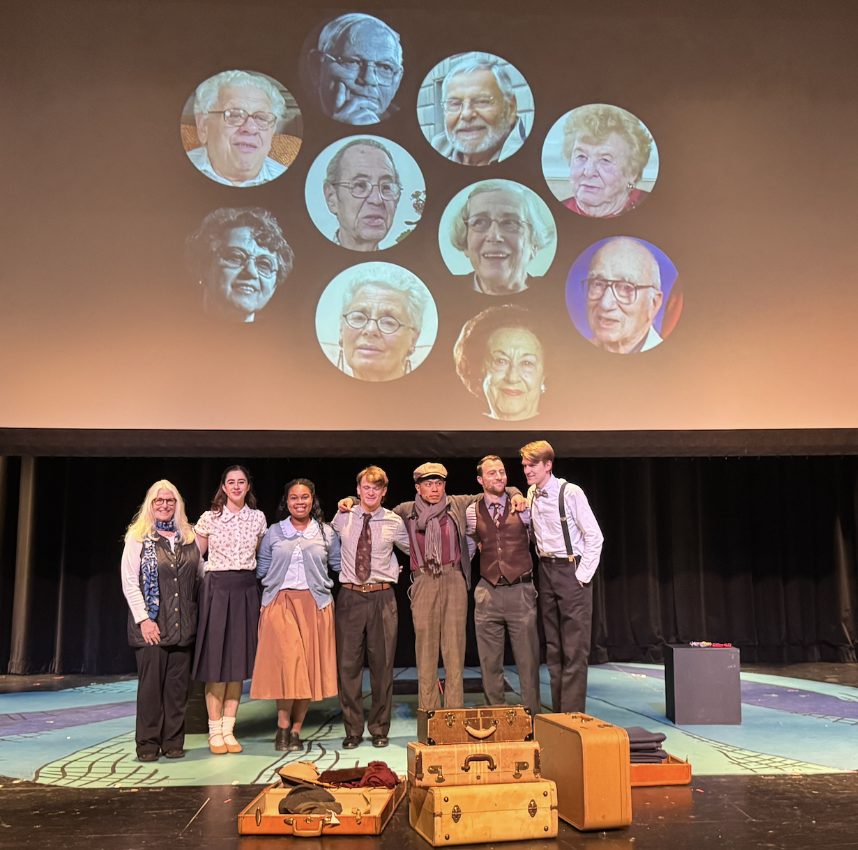
On March 27, the sophomore class attended a performance of Survivors, a one-hour docudrama produced by the Arts For Change organization that brings the Holocaust to life through ten eyewitness accounts by survivors. The production offers students a more immediate personal understanding of one of history’s most devastating events.
Survivors featured the testimonials of Holocaust survivors and how they had to grow up and adapt to the world around them. The performance has become a recurring part of the Calabasas High School curriculum over the past several years. During sophomore year, students typically study the Holocaust in both History and English classes, making the play particularly relevant. Throughout the play, the devastation of the event was felt through the survivors, and how they lost family and friends they made along the way.
The traveling band of actors originated their play at CHS, and have now returned to present for the sophomores. The troop consisted of six actors, and each presented different testimonials.
Adam Weinstein, a history teacher at CHS, believes that seeing the event moves historical knowledge beyond abstract textbooks, bridging the gap between the classroom and real life.
“A lot of times, when you study history, it’s a lot about statistics and numbers. The play helps bring it to life in a way that you might not get in a regular classroom setting.”
Weinstein explained that the play is based on real survivor testimony, allowing students to connect with the material presented.
“It’s actors playing the roles, but it’s based on real-life survivor testimony,” Weinstein said. “The more ways that students can engage with these kinds of things, the better off they’ll be with their understanding.”
By presenting lived experiences, Survivors encourages deeper engagement with difficult topics. Weinstein noted that the production has consistently strengthened students’ comprehension of complex and catastrophic history.
“You’re seeing it in a different perspective than you see in the classroom,” Weinstein said. “This play has certainly contributed toward my students’ understanding of very difficult histories.”
Beyond learning about past events, Weinstein highlighted the purpose of studying history.
“If we’re aware of the past, you can take those things and take steps to hopefully stop it from reoccurring in the present,” Weinstein said. “It’s supposed to also provide encouragement for people to stand up against antisemitism or any other type of discrimination.”
Jade Redfield, a sophomore at CHS, explains why it is important to remember the holocaust and why events like these benefit students.
“They gave a bunch of examples of how history repeats itself, and I think that is true. The genocide of the Holocaust mirrors things that happen today. So I think awareness of the Holocaust and how a lot of people just went with it and were bystanders discourages people from being bystanders in discrimination today.”
The play also demonstrated the many people who helped the Holocaust survivors by allowing them to hide and giving food to Jews. The writer of the play and various actors are descendants of Holocaust survivors, and they drew their inspiration from them.
Organizing the event requires extensive planning and coordination by school admin. Assistant Principal Dr. Katie Booth, who oversees the process, emphasized the importance of setting up logistics.
“We needed to make sure that we have a location and a date that works with all the current productions that are already in place. It’s a lot of coordination about locations and timing, and then meeting with teachers and letting them know.”
Beyond its historical focus, the production connects to broader themes of empathy. By using individual testimonies within a larger moral framework, the production challenges students to not only remember the past, but their own responsibilities in the present.
Booth explained that planning for the event began months in advance.
“The coordination actually started back in August,” Booth said. “One of the first things is finding a space like the PAEC and making sure it works with everything else happening on campus.”
In addition to logistics, Booth shared the importance of the play’s message.
“It is about teaching tolerance and how we can help make a better community by being understanding and kind. So, although it centers around the Holocaust, it also centers around conversations about how we can ensure that we don’t exhibit negative behaviors that have been seen in the past,” said Booth.
Weinstein shared what he hopes his students will learn from the event.
“It’s supposed to also provide encouragement for people to stand up against antisemitism or any other type of discrimination,” said Weinstein.
For educators, the value of studying events like the Holocaust lies in recognizing trends across history. Exposure to these can ensure students have the awareness to break harmful patterns.
“If we’re aware of the past, you can take those things and take steps to hopefully stop it from reoccurring in the present,” said Weinstein.
Part of the goal for students attending is to become aware of injustice and to appreciate all diverse communities.
“We want students to understand how to support others and stand up for people who may be experiencing challenges,” Booth said. “It’s about creating a more supportive and aware community.”
Booth emphasized that the Holocaust remains a critical topic for students to study.
“It’s important that we understand its impact, how that could potentially impact other student groups, and how we can move forward as a community, knowing that we have so many amazing, different groups and individuals on our campus,” said Booth.
Abigail Freeman, a sophomore at CHS, expressed her opinions about the survivors’ play.
“At first, I was thinking, Why would they make this into a play? That sounds really disrespectful, to turn the Holocaust into a play, but I think that they portrayed it really well. They showed the point of view of survivors, and then they also talked about all the different people who died, and I felt that they weren’t going to talk about that. So I’m glad that they mentioned it. I think that it was a good experience,” Freeman said.
Freeman also shared what she hopes students will remember about the performance.
“I hope that they would take away the messages that hate could still happen in the real world today. And to remember the Holocaust, because knowing the past will help us change the future for the better.”
Lastly, Freeman shared why she thinks it’s important to remember the Holocaust and the past.
“There have been stories about how right after the Holocaust, many people didn’t believe that it actually happened. So I think that educating people about it and going to different high schools and telling people a story of the Holocaust is really important,” Freeman said.
The Survivors play encourages students to reflect and apply its lessons to the present. The annual performance remains a tradition that fosters empathy in the Calabasas student body and serves as a reminder of the lasting impact of the Holocaust.
– written and

